Arrange an appointment directly, complete our self-referral form, or ask a healthcare professional to refer you using our professional referral form.

Home › Private Clinical Services › Biomechanical and Orthotic Assessments
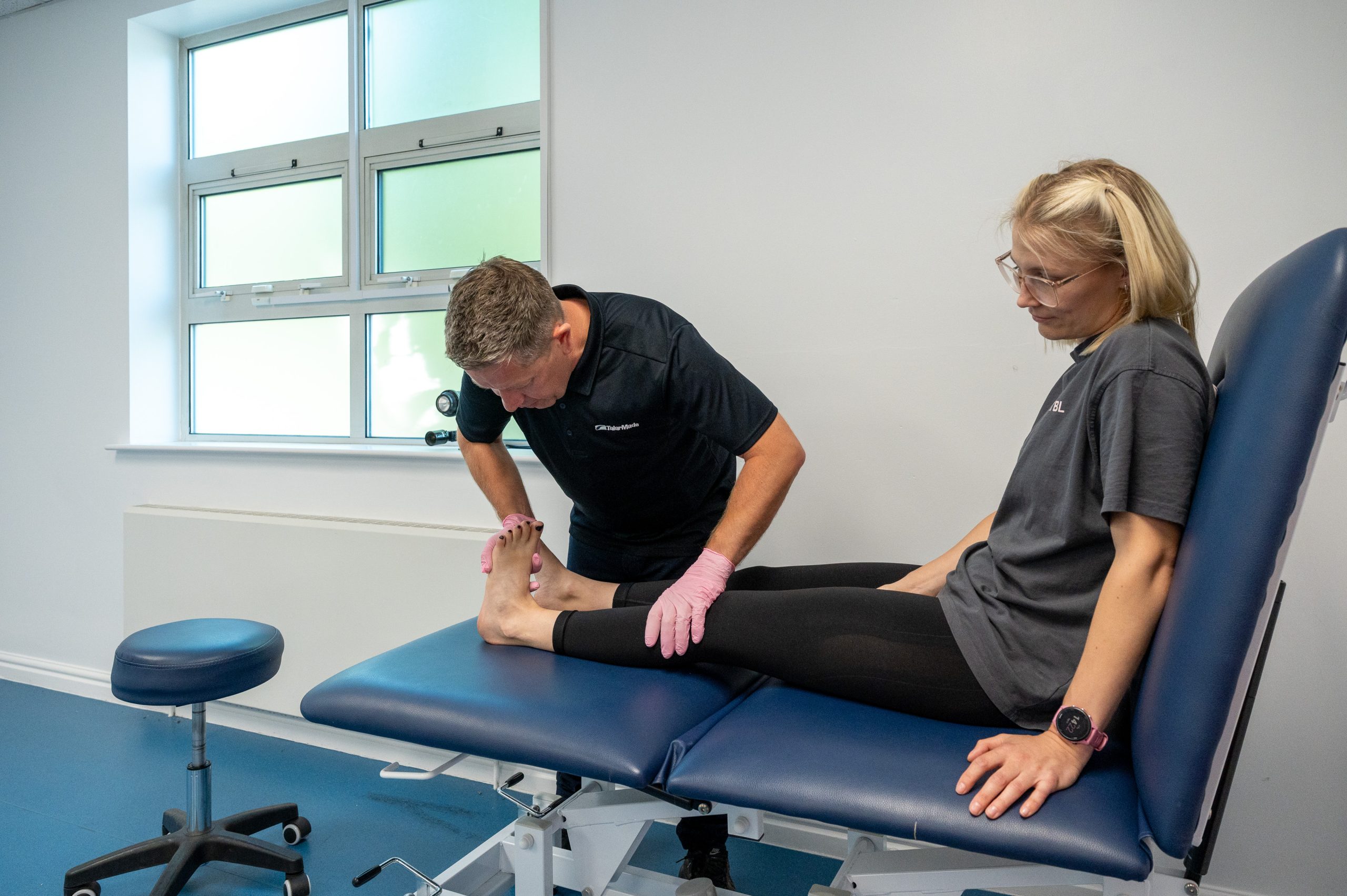
As human beings all move differently, examiniation by our specialist clinicians focusses on understanding of how you move as an individual. A biomechanical assessment includes history taking, physical examination, site specific tests, muscle strength tests and analysis of how you move (gait analysis).
Effective biomechanical assessment allows our clinicians to prescribe hollistic treatment plans to assist you in achieving you rehabilitation goals and tailor the correct orthotic solution to your needs.
This service may be for you if you have:
You might be wondering why we need to look at more than just the painful area itself. That’s because pain in your foot, leg or knee is often caused by how your whole body moves, not just where it hurts.
Everybody’s mechanics and anatomy are a little different, and understanding yours helps us work out what’s really driving the problem. This assessment gives us that clearer picture, so the treatment we recommend addresses the actual cause, not just the symptom — and is much more likely to work for you.
Every patient sees an experienced clinician for a full medical history and a thorough clinical and biomechanical examination. Where it helps to understand your problem, we may also carry out specific tests, such as gait analysis using specialist software, or an assessment of the pressures and forces through your foot — whether barefoot, inside your shoe, or externally. Not every test is needed for every patient; we only use what’s relevant to you.
These assessments help us build a clear picture of your individual biomechanics. We’ll explain what’s causing your problem in plain terms, along with the treatment options available, which may include orthoses, braces, specialist footwear or splints, as well as exercises, strengthening, activity advice or shockwave therapy for pain.
Not every orthosis needs to be custom-made. Many patients do well with a prefabricated, well-designed device — sometimes adapted to fit — while others need a fully bespoke solution shaped around their individual assessment.
Once you understand your options, we’ll agree a treatment plan and outcome goal with you together, with costs clearly discussed and agreed before anything is provided.
Arrange an appointment directly, complete our self-referral form, or ask a healthcare professional to refer you using our professional referral form.
Your clinician will take a full history and carry out a thorough clinical and biomechanical examination, including any specific tests you need — such as gait analysis or pressure and force assessment.
We'll explain what's causing your problem in clear, simple terms and talk through the treatment options available, agreeing a plan and outcome goal together — with costs discussed and agreed upfront.
If an orthosis is needed, we'll measure you for it. Prefabricated or modular devices can often be fitted the same day; custom orthoses may need a cast, scan or mould, and a separate fitting appointment once ready.
We'll agree a review plan with you to make sure your treatment is achieving the outcome you agreed together.
Depending on your assessment, your clinician may also recommend exercise and strengthening programmes, shockwave therapy for pain, APOS therapy and changes to your footwear.
Your clinician will take a full history and carry out a thorough clinical and biomechanical examination, including any specific tests needed, before explaining your options and agreeing a treatment plan with you.
You can book an appointment directly, complete our self-referral form, or be referred by a healthcare professional using our professional referral form.
Often, yes — prefabricated and modular orthoses are frequently available to take home on the day of your assessment. Custom orthoses need to be measured, cast, scanned or moulded, so you’ll need a separate fitting appointment once they’re ready.
Not necessarily. Many patients do well with a prefabricated, well-designed orthosis, sometimes adapted to fit. We’ll only recommend a custom device where it’s genuinely the best option for you.
If you’re not sure whether this service is right for you, contact the clinic team, book an appointment, complete the self-referral form, or be referred by your healthcare professional.