TalarMade: | |

KinetiX™ Model D

Specialist support for fixed forefoot varus

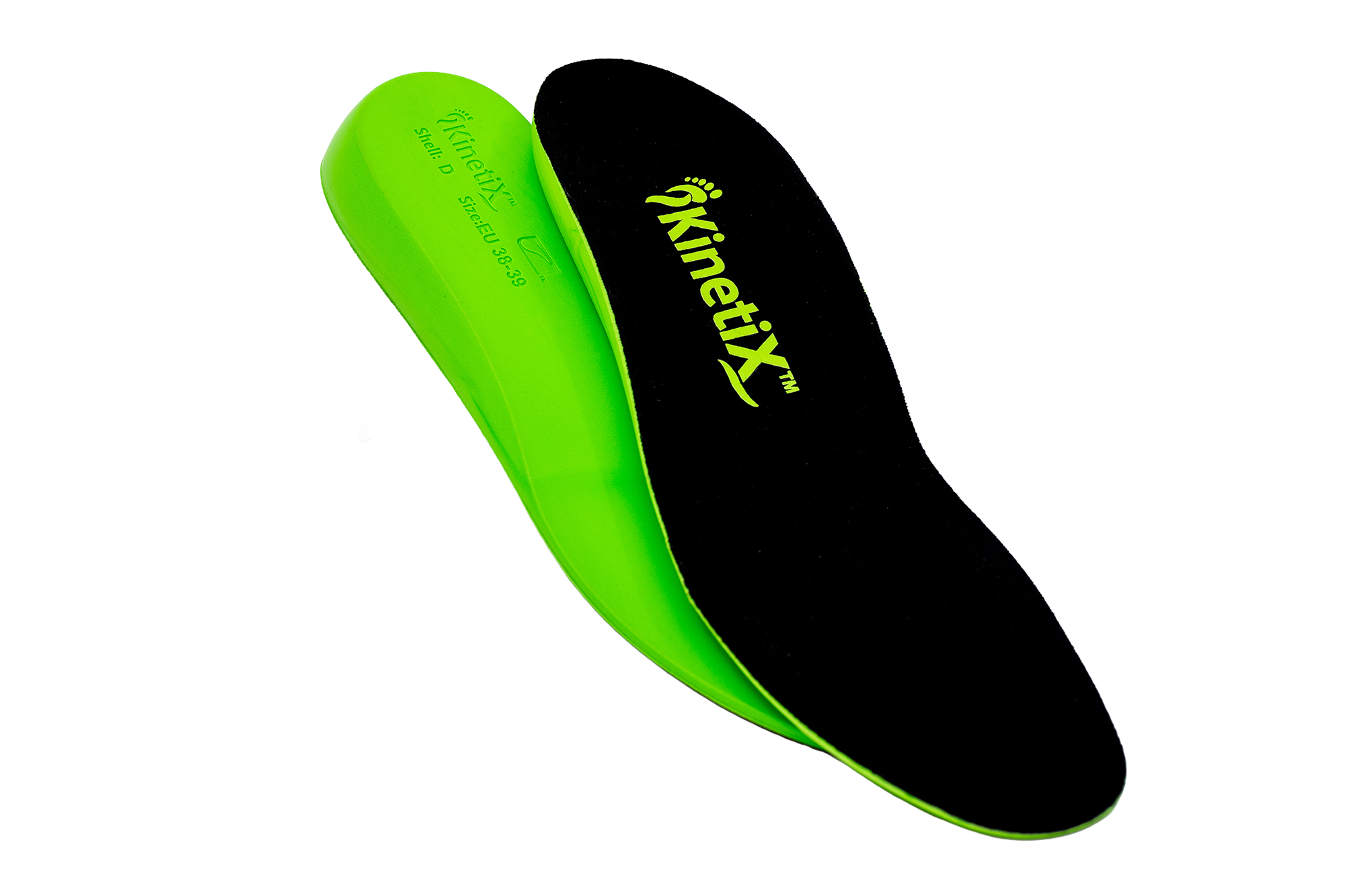
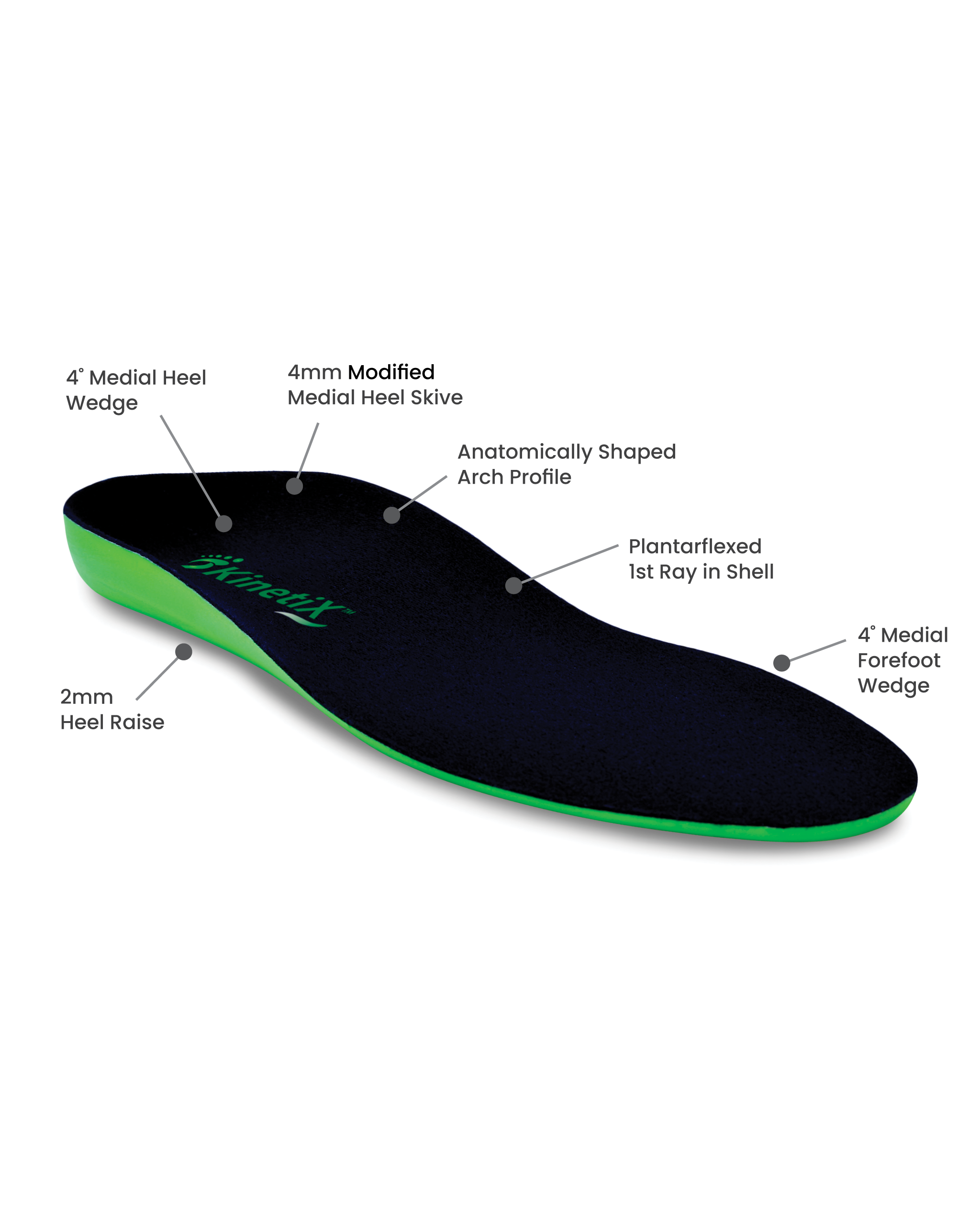
KinetiX™ Model D is a full-length foot orthosis combining a 4° medial heel wedge, 4 mm modified medial heel skive and 4° medial forefoot wedge. It is primarily designed for advanced progressive collapsing flatfoot deformity (PCFD), previously commonly described as tibialis posterior tendon dysfunction or PTTD, where a fixed forefoot varus is present. Model D may also be considered for tarsal coalition with fixed forefoot varus and selected runners with medial tibial stress syndrome (MTSS).
Price available to professional account only

What is KinetiX™ Model D?

Model D is a specialist full-length insole for people with a specific fixed foot position. It is not a general flatfoot or comfort insole.

It is mainly prescribed for advanced PCFD when the front of the foot remains tilted. It may also be used for some people with tarsal coalition or selected runners with pain along the inside of the shin.

Key benefits

  • Designed for fixed forefoot varus
  • Supports the heel and forefoot
  • Full-length integrated design
  • Three material hardnesses
  • Professionally assessed and fitted

Model D is a specialist product and should only be used following clinical assessment and prescription.

Using your KinetiX™ Model D insoles

Your healthcare professional will select the correct size and hardness and explain when the insoles should be worn.

Model D is full length because its medial wedge must extend beneath the forefoot.

Before use

  • Check the insoles for damage
  • Make sure they sit flat
  • Use supportive, closed footwear
  • Check for pressure or rubbing

Important advice

  • Follow the prescribed wearing programme
  • Increase wear gradually where advised
  • Check your feet regularly
  • Do not modify the insoles yourself
  • Stop use if pain or skin damage develops
  • Attend planned clinical reviews

Downloads, videos and product resources

Helpful product support

Use the resources below to find sizing, fitting and usage information.

Patient FAQs

Frequently asked questions

Progressive collapsing flatfoot deformity is a condition in which the shape and function of the foot gradually change. It was previously often called tibialis posterior tendon dysfunction or PTTD.

It means the front of the foot remains tilted when the back of the foot is held in a more controlled position. Model D includes support beneath this area.

No. It is designed for specific presentations where assessment confirms a fixed forefoot varus.

It may be prescribed for selected runners with MTSS. For this condition, it is typically worn during running.

Its medial forefoot wedge must extend beneath the front of the foot to provide the intended support.

No. It is supplied to registered healthcare professionals and requires clinical assessment.

Stop use and seek advice if you develop persistent redness, blistering, wounds, increased pain or instability.

Order and prescribe with TalarMade

Model D is available to registered healthcare professionals. Contact TalarMade for ordering, fitting or prescription support.

Clinical use and suitability

Model D combines a 4° medial heel wedge, 4 mm modified medial heel skive and 4° medial forefoot wedge.

Its primary indication is advanced PCFD with fixed forefoot varus. It may also be considered for tarsal coalition with fixed forefoot varus and selected running-related MTSS presentations.

Model D is not intended as a general prescription for flexible pes planus, uncomplicated pronation or PCFD without fixed forefoot varus.

Clinical considerations may include

  • Advanced PCFD with fixed forefoot varus
  • Advanced presentation formerly described as PTTD
  • Tarsal coalition with fixed forefoot varus
  • Selected running-related MTSS

Confirm that the patient’s foot position and treatment objectives match the combined rearfoot and forefoot geometry.

Product specifications

Product type

Insole

Category

Foot Orthoses

Brand / range

TalarMade KinetiX™ Model D

Intended user

Patients with a defined clinical presentation following professional assessment

Clinical use

Alters how force is distributed across the plantar surface of the foot and modifies the speed at which the joints move, influencing the stresses placed on soft tissues and joints in the foot and lower limb.

Suitable presentations

Medial Tibial Stress Syndrome (MTSS), Tibialis Posterior Dysfunction (with Forefoot Varus), Tarsal Coaltion with forefoot varus

Sizes

7 Sizes to fit 34-47 (EU) and 2-12.5 (UK) shoe sizes.

Supplied as

Pair

Product codes

Not Available

Availability

Registered professionals only

Professional pricing

Login required

Use for MTSS

For MTSS, Model D should usually be considered only for selected runners whose assessment matches its geometry.

It is typically used during running and should form part of a wider treatment plan addressing training load, strength, recovery and other contributing factors.

1

Consider before prescribing

  • Confirmed diagnosis
  • Fixed forefoot varus
  • Stage and flexibility of PCFD
  • Required mechanical effect
  • Appropriate hardness
  • Intended activity
  • Footwear fit
  • Skin integrity
  • Patient tolerance

Fitting notes

  • Confirm model, size and hardness
  • Position the heel securely
  • Preserve the medial forefoot wedge
  • Check footwear width and depth
  • Assess comfort and skin response
  • Review the clinical effect

For further product guidance, see the downloads, videos and resources below.

Defined geometry for a defined presentation

Model D combines rearfoot and forefoot features within a reproducible prefabricated device. Its narrow clinical role supports more precise selection where fixed forefoot varus requires both medial rearfoot and forefoot intervention.

Model D geometry

  • 4° medial heel wedge
  • 4 mm modified medial heel skive
  • 4° medial forefoot wedge
  • 2 mm heel raise
  • Full-length profile
  • A40 Soft
  • A55 Medium
  • A70 Hard

For further product guidance, see the downloads, videos and resources below.

Professional downloads, videos and product resources

Product documentation and professional support

Access product resources to support selection, fitting, patient guidance and ordering.

Patient FAQs

Frequently asked questions

Patients with advanced PCFD and a confirmed fixed forefoot varus.
No. Earlier or more flexible presentations may require a different prescription.
No. A flat or pronated foot alone is not an indication.
It may be considered when tarsal coalition is accompanied by a fixed forefoot varus.
For selected runners whose presentation matches the device. It is normally worn during running for this indication.
The medial forefoot wedge must extend beneath the forefoot to provide its intended effect.
Select A40, A55 or A70 according to the required intervention, presentation and patient tolerance.
Review footwear fit, comfort, skin response, symptoms and function.

Order and prescribe with TalarMade

Model D is available to registered healthcare professionals. Contact TalarMade for ordering, fitting or prescription support.

Reviews

There are no reviews yet.

Be the first to review “KinetiX™ Model D”

Your email address will not be published. Required fields are marked *